AI Interview Preparation Tools That Actually Help
Job interviews have changed significantly over the past few years. Employers are no longer looking only at academic qualifications or work experience. They also evaluate communication skills, problem-solving ability, confidence, technical knowledge, and how well candidates can explain their ideas. As competition continues to increase in 2026, preparing for interviews has become more important than ever.
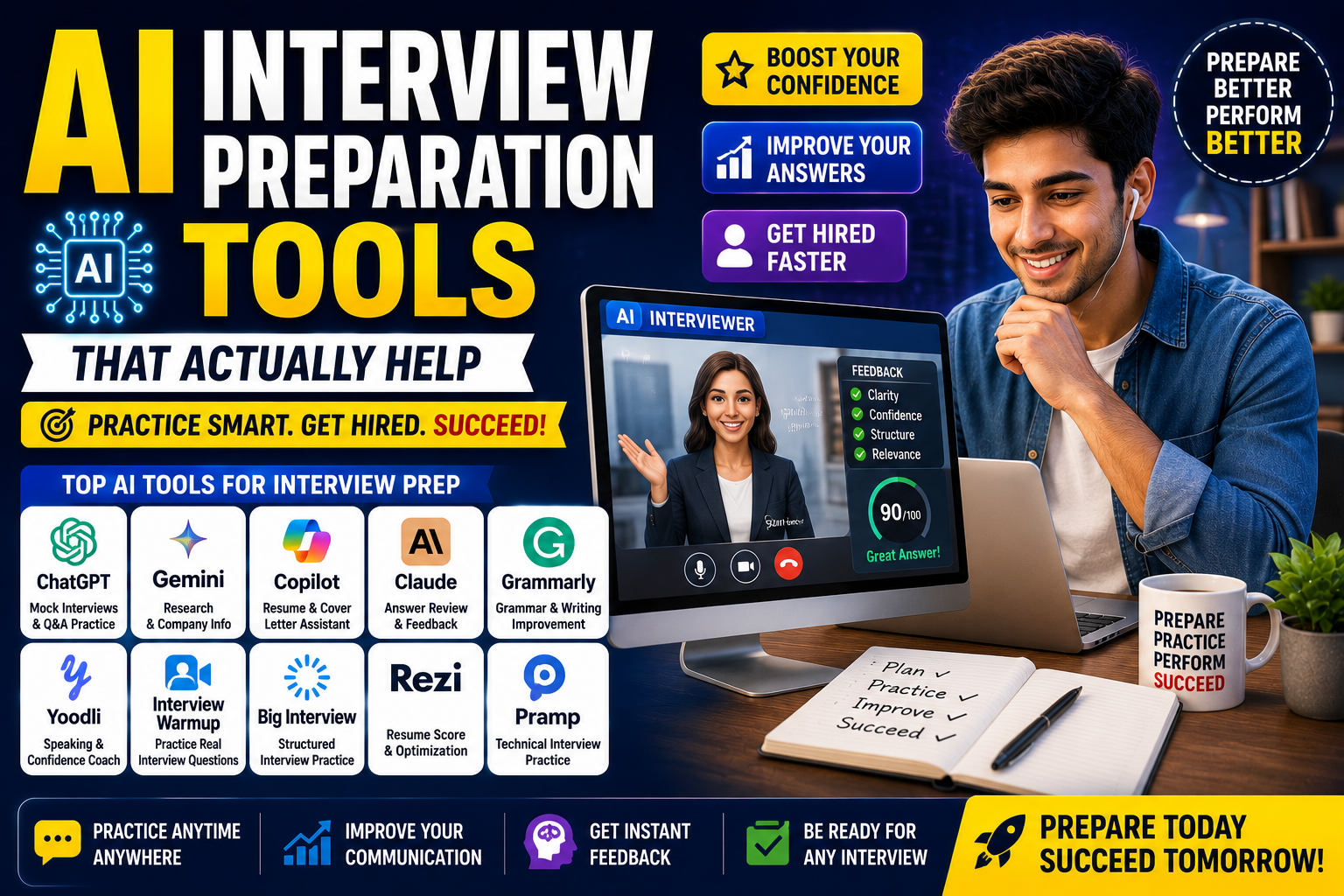
Fortunately, Artificial Intelligence has made interview preparation easier for students, fresh graduates, and experienced professionals. Today, AI tools can simulate interview questions, provide feedback on your answers, improve your resume, help you practice communication skills, and even analyze your speaking pace and confidence.
However, AI should not replace genuine preparation. It should be used as a practice partner that helps you improve before facing a real interviewer. The more you practice with AI while continuing to build your own knowledge and communication skills, the better prepared you will be.
If you are looking for verified internships, graduate jobs, scholarships, and career opportunities, visit Energie Intelligent at www.energieintelligent.com. The platform regularly publishes trusted opportunities and career guides for students and fresh graduates.
Why AI Is Useful for Interview Preparation
Many candidates feel nervous before interviews because they do not know what questions will be asked.
AI tools can reduce this uncertainty by allowing candidates to practice common interview questions realistically.
They help students:
- Practice speaking
- Improve confidence
- Organize answers
- Learn professional communication
- Identify weak areas
- Receive instant feedback
Instead of attending an interview without preparation, candidates can practice multiple times until they become comfortable.
Can AI Help You Get a Job?
AI cannot guarantee a job.
No tool can promise that.
However, AI can improve your preparation by helping you:
- Understand interview questions
- Practice technical topics
- Improve communication
- Build confidence
- Reduce mistakes
The final hiring decision always depends on your knowledge, experience, attitude, and performance during the interview.
1. ChatGPT
ChatGPT has become one of the most popular interview preparation tools.
Visit : https://chatgpt.com/
It can generate interview questions for almost any profession.
For example:
- Software Developer
- Graphic Designer
- Accountant
- Business Analyst
- Teacher
- Marketing Executive
- Customer Support Representative
Students can ask ChatGPT to act as an interviewer and conduct a complete mock interview.
Best Uses
- HR interview practice
- Technical interview preparation
- Behavioral interview questions
- Resume improvement
- Cover letter writing
- Salary negotiation practice
One of its biggest advantages is that it allows unlimited practice with different types of questions.
2. Google Gemini
Gemini is useful for candidates who need research support before interviews.
Visit : https://gemini.google.com/
It helps users understand:
- Company information
- Industry trends
- Business models
- General interview questions
Learning about a company before an interview demonstrates genuine interest and professionalism.
3. Microsoft Copilot
Candidates who regularly use Microsoft Office may find Copilot useful.
Visit : https://copilot.microsoft.com/
It assists with:
- Resume editing
- Cover letters
- Presentation preparation
- Professional writing
Students applying for internships often use Copilot to improve application documents.
4. Claude
Claude performs well when reviewing long documents.
Visit : https://claude.ai/
Job seekers use it to:
- Improve resumes
- Review portfolios
- Analyze job descriptions
- Prepare interview answers
Instead of giving short responses, Claude often provides detailed suggestions that help candidates improve their communication.
5. Grammarly
Grammar mistakes can leave a poor impression during written communication.
Visit : https://grammarly.com/
Grammarly helps improve:
- Email writing
- Resume language
- Cover letters
- Professional communication
Although interviews mainly test speaking skills, written communication is also important during the hiring process.
6. Yoodli
Yoodli is designed specifically for speaking practice.
Visit : https://yoodli.ai/
It analyzes:
- Speaking speed
- Filler words
- Confidence
- Eye contact (depending on setup)
- Communication quality
Many candidates are surprised to discover how often they use words like “um,” “uh,” and “actually.”
Reducing these habits can make communication more professional.
7. Interview Warmup
Interview Warmup helps candidates practice interview questions in different career fields.
It encourages users to answer questions aloud instead of only reading sample answers.
Speaking your answers helps improve confidence much more than silently reading interview guides.
Common Interview Questions You Should Practice
Regardless of your profession, certain questions appear frequently.
Examples include:
- Tell me about yourself.
- Why do you want to work here?
- What are your strengths?
- What are your weaknesses?
- Describe a difficult situation.
- Why should we hire you?
- Where do you see yourself in five years?
AI tools can generate multiple versions of these questions, helping candidates prepare different responses.
Technical Interview Preparation
Technical interviews require more than memorizing definitions.
Candidates should understand concepts clearly.
AI tools can explain:
- Programming problems
- Database concepts
- Networking
- Algorithms
- Marketing strategies
- Accounting principles
- Engineering topics
Students should always practice solving problems independently rather than depending entirely on AI explanations.
Behavioral Interview Preparation
Behavioral interviews evaluate how candidates handled situations in the past.
Questions often begin with:
- Tell me about a time when…
- Describe a situation where…
- Give an example of…
AI tools can help candidates organize answers using structured formats while encouraging them to provide genuine personal experiences.
Resume Review Before the Interview
Many interview invitations depend on a strong resume.
AI tools can identify:
- Grammar mistakes
- Weak descriptions
- Missing achievements
- Formatting issues
- Unclear wording
However, candidates should ensure all information remains truthful and accurately represents their experience.
Research the Company
One of the biggest interview mistakes is arriving without knowing anything about the employer.
Before every interview, research:
- Company history
- Products
- Services
- Mission
- Recent news
- Industry
Candidates who understand the organization often perform better because they can give more relevant answers.
8. Final Round AI
Final Round AI is designed for candidates preparing for competitive job interviews. It focuses on mock interviews, personalized feedback, and interview coaching.
Students and professionals use it to practice interviews for different industries, including technology, finance, marketing, consulting, and customer support.
Best Uses
- Mock interviews
- Communication practice
- Technical interview preparation
- HR interview practice
- Personalized interview feedback
Although AI feedback is useful, candidates should also practice with friends, mentors, or career counselors whenever possible.
9. Huru AI
Huru AI is another interview practice platform that helps users prepare through repeated mock interviews.
Visit : https://huru.ai/
It provides suggestions on improving responses and encourages candidates to answer questions naturally instead of memorizing scripts.
Why It Helps
Practicing multiple interviews helps candidates become more comfortable speaking under pressure.
Confidence usually improves with repetition.
10. LinkedIn AI Features
LinkedIn continues to introduce AI-powered features that support job seekers.
Students can use these features to improve:
- Professional profiles
- Resume summaries
- Skills descriptions
- Career recommendations
A complete and professional LinkedIn profile can increase visibility among recruiters.
AI for Coding Interviews
Programming interviews are often more challenging because they include technical assessments.
AI tools can help explain:
- Data structures
- Algorithms
- Object-oriented programming
- Database queries
- Debugging
- System design
However, candidates should solve coding problems themselves before asking AI for help.
Learning through practice builds stronger problem-solving skills.
AI for Case Study Interviews
Business, consulting, and management roles often include case study interviews.
AI tools can help candidates practice:
- Business analysis
- Market research
- Problem solving
- Financial reasoning
- Strategic thinking
Candidates should learn to explain their reasoning step by step rather than simply presenting an answer.
AI for English Speaking Practice
Many international students worry about speaking English during interviews.
AI tools can help improve:
- Pronunciation
- Vocabulary
- Sentence structure
- Speaking confidence
- Fluency
Daily practice for even 15 to 20 minutes can make a noticeable difference over time.
Remember that interviewers usually care more about clear communication than having a perfect accent.
AI Resume Optimization
Before attending an interview, review your resume carefully.
AI tools can identify areas that need improvement, such as:
- Weak action verbs
- Unclear achievements
- Repetitive wording
- Grammar mistakes
- Formatting inconsistencies
A well-organized resume creates a strong first impression.
AI Cover Letter Assistance
Many companies still request cover letters.
AI tools can help create a first draft, but candidates should personalize every letter.
Include:
- Why you are interested in the company
- Relevant experience
- Skills that match the role
- Career goals
Generic cover letters are easy for recruiters to recognize.
AI for Salary Negotiation Practice
Salary discussions make many candidates uncomfortable.
AI tools can simulate conversations where candidates practice:
- Discussing salary expectations
- Responding to offers
- Negotiating professionally
- Explaining their value
Practicing these conversations helps reduce nervousness during real interviews.
AI for Group Discussion Practice
Some employers conduct group discussions before individual interviews.
AI can generate discussion topics such as:
- Artificial Intelligence
- Climate Change
- Digital Marketing
- Remote Work
- Business Ethics
Practice organizing your thoughts clearly while listening respectfully to others.
Common Interview Mistakes
Many candidates lose opportunities because of avoidable mistakes.
Some common examples include:
- Arriving late
- Not researching the company
- Giving very short answers
- Speaking too much without answering the question
- Criticizing previous employers
- Looking unprepared
- Reading answers directly from notes during online interviews
AI practice can help identify some of these issues before the actual interview.
Tips for Virtual Interviews
Online interviews have become common for internships and remote jobs.
Before your interview:
- Test your internet connection.
- Check your camera and microphone.
- Choose a quiet location.
- Dress professionally.
- Keep your resume nearby.
- Maintain eye contact with the camera.
- Remove unnecessary background distractions.
Professional preparation creates a positive impression.
Build Confidence Through Practice
Confidence does not appear overnight.
It develops through repeated preparation.
Instead of practicing only once, schedule several mock interviews over multiple days.
Each practice session helps you:
- Speak more naturally.
- Improve your answers.
- Reduce nervousness.
- Think more clearly under pressure.
The goal is progress, not perfection.
Keep Learning After Every Interview
Even if you are not selected, every interview provides valuable experience.
After each interview, ask yourself:
- Which questions were difficult?
- Where did I hesitate?
- Which skills should I improve?
- Was I confident?
- Did I explain my experience clearly?
Use AI tools to practice these areas before your next interview.
Continuous improvement is one of the most effective ways to increase your chances of success.
Combining AI with Human Preparation
AI is an excellent practice partner, but it should not be your only source of preparation.
Successful candidates also:
- Research the employer.
- Review their resume.
- Understand the job description.
- Practice speaking aloud.
- Learn about the industry.
- Improve technical knowledge.
Combining AI with traditional preparation methods creates the best results.
Final Thoughts
Artificial Intelligence has transformed interview preparation by making professional practice available to everyone. Students, fresh graduates, and experienced professionals can now improve their communication, technical knowledge, resumes, and confidence using AI-powered tools from home.
The most effective approach is to use AI to strengthen your skills rather than replace genuine learning. Employers continue to value honesty, problem-solving ability, teamwork, adaptability, and strong communication. AI can help you prepare for these expectations, but your knowledge and attitude remain the biggest factors in interview success.
If you are searching for verified internships, graduate jobs, scholarships, remote work opportunities, and career resources, visit www.energieintelligent.com The platform regularly publishes trusted opportunities and practical career guides to help students and job seekers achieve their goals.
Stay updated with the latest jobs, internships, scholarships, and Course opportunities right here.
Explore More Opportunities
Stay updated with the latest:
Join our community and take your engineering career to the next level.