How to Become a Software Developer in 2026: Complete Career Guide
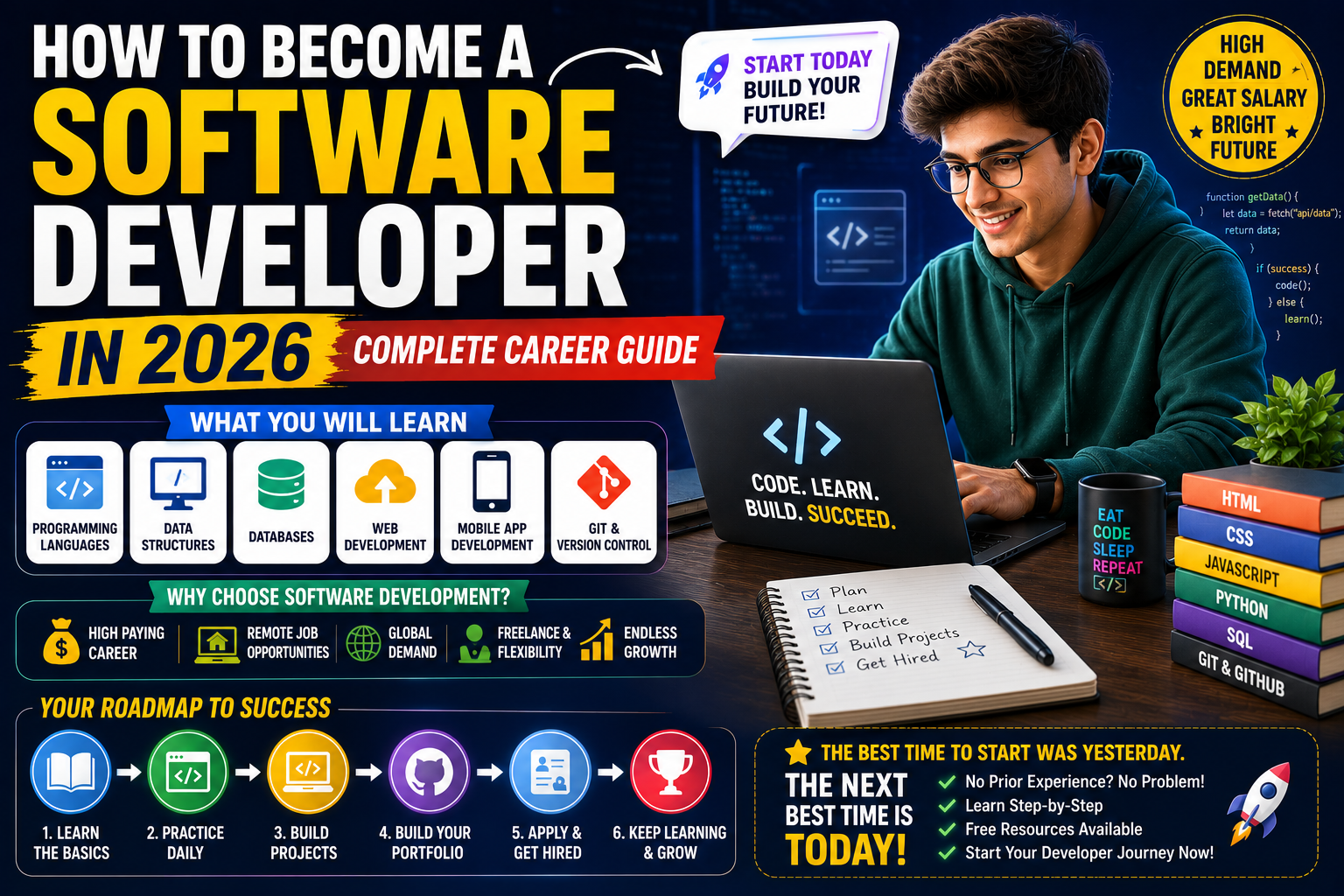
Software development continues to be one of the most popular and rewarding career paths in 2026. Businesses, governments, startups, healthcare organizations, banks, educational institutions, and technology companies all depend on software to manage their daily operations. As digital transformation continues across industries, the demand for skilled software developers remains strong.
One of the biggest advantages of becoming a software developer is that the profession offers a wide variety of career options. You can work for a technology company, build software for international clients, join a startup, work remotely from home, or even create your own products and applications. Many developers also choose freelancing, allowing them to work with clients from different countries.
Unlike some careers that require expensive degrees or years of specialized education, software development allows people to learn through university programs, online courses, coding bootcamps, and self-study. What matters most to employers is your ability to solve problems and build real software.
If you are looking for verified internships, graduate programs, remote jobs, scholarships, and career resources to start your technology career, Energie Intelligent is a useful platform where students and professionals can discover genuine opportunities and practical career guidance.
What Does a Software Developer Do?
A software developer designs, builds, tests, improves, and maintains software applications.
These applications may include:
- Websites
- Mobile applications
- Desktop software
- Business management systems
- Banking software
- Healthcare systems
- Online shopping platforms
- Artificial intelligence applications
- Cloud platforms
- Games
Developers work closely with designers, project managers, testers, business analysts, and other professionals to create software that solves real problems.
Depending on the company, software developers may also participate in planning projects, discussing technical solutions, fixing software bugs, improving performance, and adding new features.
Why Choose Software Development in 2026?
Technology continues to grow across almost every industry.
Companies need software developers to build systems that improve productivity, customer experience, automation, security, and communication.
Software development remains attractive because it offers:
- Strong career growth
- International job opportunities
- Remote work options
- Freelance opportunities
- Competitive salaries
- Continuous learning
- Diverse career paths
- Opportunities to build personal products
Whether you want to work for a global company or launch your own startup, software development provides flexibility that many other careers do not.
Skills Every Software Developer Needs
Programming is only one part of becoming a successful developer.
Employers also look for people who can understand business requirements, communicate effectively, and solve problems.
Important skills include:
Programming
Learning programming languages is the foundation of software development.
Common languages include:
- JavaScript
- Python
- Java
- C#
- C++
- TypeScript
- PHP
- Go
- Kotlin
- Swift
You do not need to master every language.
Choose one language first and become comfortable solving problems with it.
Problem Solving
Software development is about solving problems.
Developers constantly analyze requirements, identify bugs, and create efficient solutions.
Strong logical thinking is often more valuable than memorizing programming syntax.
Communication
Developers work in teams.
You should be able to explain technical ideas clearly to colleagues, managers, and clients.
Good communication also helps during code reviews and project discussions.
Teamwork
Modern software projects usually involve multiple developers.
Understanding collaboration, version control, and shared responsibilities is important.
Continuous Learning
Technology changes quickly.
Successful developers regularly learn new tools, frameworks, and programming techniques.
Different Types of Software Developers
Software development includes many specializations.
Choosing one depends on your interests and career goals.
Front-End Developer
Front-end developers build the part of a website or application that users interact with.
Typical technologies include:
- HTML
- CSS
- JavaScript
- React
- Vue
- Angular
Their focus is creating responsive, user-friendly interfaces.
Back-End Developer
Back-end developers build the systems that power applications behind the scenes.
Common technologies include:
- Node.js
- Python
- Java
- PHP
- .NET
- Databases
- APIs
They work with servers, databases, authentication systems, and business logic.
Full-Stack Developer
Full-stack developers understand both front-end and back-end development.
They can build complete web applications from start to finish.
Many startups prefer full-stack developers because they can work across different parts of a project.
Mobile App Developer
Mobile developers create applications for smartphones and tablets.
Popular technologies include:
- Kotlin
- Swift
- Flutter
- React Native
Applications may be developed for Android, iOS, or both.
Game Developer
Game developers create video games for computers, consoles, and mobile devices.
They often work with engines such as Unity or Unreal Engine.
Cloud Developer
Cloud developers build applications that run on cloud platforms.
They work with technologies related to distributed systems, storage, scalability, and cloud infrastructure.
AI Developer
Artificial intelligence developers create software using machine learning and other AI technologies.
This specialization continues to grow across many industries.
Do You Need a Computer Science Degree?
Many successful developers have computer science degrees.
However, many others enter the profession through alternative learning paths.
Possible options include:
- Computer Science degree
- Software Engineering degree
- Information Technology degree
- Online courses
- Coding bootcamps
- Self-learning
- Professional certifications
While a degree can be valuable, employers increasingly evaluate practical skills, coding ability, and project experience.
Best Programming Languages to Learn First
Choosing your first programming language can feel confusing.
Fortunately, there is no perfect answer.
Each language has strengths.
Python
Python is known for its simple syntax.
It is widely used for:
- Artificial Intelligence
- Machine Learning
- Automation
- Data Science
- Web Development
Many beginners choose Python because it is relatively easy to read and understand.
JavaScript
JavaScript is essential for web development.
It allows developers to create interactive websites and can also be used for server-side programming with Node.js.
Anyone interested in becoming a web developer should learn JavaScript.
Java
Java remains popular in enterprise software, banking systems, Android development, and large business applications.
C#
C# is commonly used with Microsoft’s .NET platform.
It is also widely used for enterprise software and game development using Unity.
PHP
PHP continues to power many websites and content management systems.
It remains relevant for web development, especially for WordPress-based projects.
Essential Technologies Beyond Programming
Programming alone is not enough.
Developers should also understand:
HTML
The structure of web pages.
CSS
The styling and layout of websites.
Git
Version control allows developers to manage code changes and collaborate with teams.
Git is considered an essential skill.
Databases
Developers should understand databases such as:
- MySQL
- PostgreSQL
- MongoDB
APIs
Applications often communicate with each other using APIs.
Understanding how APIs work is important for modern development.
Build Projects While Learning
Employers like to see practical experience.
Instead of only completing tutorials, build your own projects.
Ideas include:
- Personal portfolio website
- To-do application
- Weather application
- Blog system
- E-commerce website
- Expense tracker
- Chat application
- Library management system
- Student management system
Every completed project improves your portfolio and demonstrates your abilities.
Learn GitHub
GitHub is widely used by software developers around the world.
It allows you to:
- Store code
- Track changes
- Collaborate with other developers
- Showcase projects
- Contribute to open-source software
Recruiters often review GitHub profiles when evaluating technical candidates. Keeping your projects organized and well documented can create a positive impression.
Create a Portfolio Website
A portfolio helps employers understand your work.
Include:
- Introduction
- Skills
- Projects
- Resume
- Contact information
- GitHub profile
- LinkedIn profile
Your portfolio should be simple, fast, responsive, and easy to navigate.
Practice Problem Solving
Coding interviews often include problem-solving questions.
Practice solving programming challenges regularly.
Focus on:
- Arrays
- Strings
- Loops
- Functions
- Objects
- Searching
- Sorting
- Basic algorithms
Consistent practice improves confidence and coding speed.
Learn How Software Teams Work
Professional software development is not only about writing code.
Developers also work with:
- Project managers
- UI/UX designers
- Quality assurance engineers
- DevOps engineers
- Product managers
- Business analysts
Understanding teamwork and communication makes you more effective in a professional environment.
Start Applying Before You Feel Perfect
Many beginners delay applying for jobs because they think they need to know everything.
In reality, no developer knows every programming language or framework.
Once you have built practical projects, understand programming fundamentals, and can explain your work confidently, begin applying for internships, junior developer roles, and graduate programs.
Each interview becomes a learning opportunity and helps you understand what employers expect.
How to Choose Your First Specialization
One of the biggest mistakes beginners make is trying to learn everything at once. Software development is a broad field, and every developer eventually focuses on one or two areas.
Here are some common career paths.
Web Development
Web development remains one of the most popular choices for beginners.
You can build:
- Business websites
- E-commerce stores
- Portfolio websites
- Web applications
- Dashboards
- Content management systems
Typical technologies include HTML, CSS, JavaScript, React, Node.js, PHP, Laravel, and databases.
Mobile App Development
If you enjoy creating smartphone applications, mobile development can be a good option.
Developers usually work with:
- Android
- iOS
- Flutter
- React Native
Mobile applications continue to be in demand across healthcare, education, banking, entertainment, and business.
Artificial Intelligence
Artificial Intelligence continues to expand into almost every industry.
AI developers often work with:
- Python
- Machine Learning
- Deep Learning
- Natural Language Processing
- Computer Vision
This field usually requires continuous learning because technologies change rapidly.
Cybersecurity
Security professionals help organizations protect their systems and data.
Career options include:
- Security Analyst
- Penetration Tester
- Security Engineer
- Cloud Security Specialist
Cybersecurity combines programming knowledge with networking and security principles.
Cloud Computing
Cloud platforms have become an essential part of modern software development.
Developers often work with cloud services for hosting applications, databases, storage, and deployment.
Learning cloud technologies can improve your career opportunities.
Should You Learn Data Structures and Algorithms?
Yes.
Many technology companies use technical interviews to evaluate problem-solving ability.
Understanding data structures and algorithms helps you write efficient software.
Important topics include:
- Arrays
- Linked Lists
- Stacks
- Queues
- Trees
- Hash Tables
- Searching
- Sorting
- Recursion
- Dynamic Programming (basic understanding)
You do not need to become an expert immediately, but regular practice is valuable.
Learn Software Development Best Practices
Writing code that works is only the beginning.
Professional developers also focus on writing code that is:
- Easy to read
- Well organized
- Efficient
- Secure
- Easy to maintain
- Properly documented
Developing good habits early will help you throughout your career.
Gain Real Experience
Many students worry because they do not have professional experience.
Fortunately, there are several ways to build experience before getting your first job.
You can:
- Complete internships
- Build personal projects
- Contribute to open-source software
- Volunteer for nonprofit organizations
- Create freelance projects
- Participate in hackathons
- Build applications for local businesses
Every completed project strengthens your portfolio.
Freelancing as a Software Developer
Many developers start earning through freelancing before joining a company.
Freelancing allows you to:
- Work with international clients
- Improve communication skills
- Build practical experience
- Create a professional portfolio
- Earn income while learning
However, freelancing also requires responsibility.
You must manage deadlines, communicate professionally, and deliver quality work consistently.
Remote Software Development Jobs
Remote work continues to grow in 2026.
Many companies now hire developers from different countries.
Remote positions can include:
- Front-End Developer
- Back-End Developer
- Full-Stack Developer
- WordPress Developer
- Mobile Developer
- DevOps Engineer
- QA Engineer
Working remotely requires self-discipline, communication skills, and the ability to collaborate with distributed teams.
Build Your Professional Resume
A software developer’s resume should focus on practical experience.
Include sections such as:
- Contact information
- Professional summary
- Technical skills
- Projects
- Education
- Certifications
- Work experience
- Internship experience
- GitHub profile
- Portfolio website
Avoid listing technologies you have never used in real projects.
Be honest about your skills.
Create an Impressive LinkedIn Profile
Many recruiters search for developers on LinkedIn.
A strong profile should include:
- Professional photo
- Clear headline
- Skills
- Project descriptions
- Experience
- Certifications
- Portfolio links
Regularly updating your profile can improve visibility to recruiters.
Prepare for Technical Interviews
Technical interviews usually test both programming knowledge and problem-solving ability.
Common interview topics include:
- Programming fundamentals
- Object-oriented programming
- Databases
- APIs
- Git
- JavaScript
- HTML and CSS
- Frameworks
- Problem-solving exercises
Interviewers may also ask you to explain projects from your portfolio.
Be prepared to discuss:
- Why you built the project
- Challenges you faced
- Technologies you used
- Improvements you would make
Common Mistakes Beginners Should Avoid
Many beginners slow their progress by making avoidable mistakes.
Some common examples include:
Learning Too Many Languages
Master one programming language before moving to another.
Strong fundamentals are more valuable than knowing basic syntax from many languages.
Watching Tutorials Without Building Projects
Tutorials are useful, but practical projects are what improve your skills.
Always apply what you learn.
Ignoring Git
Version control is an essential professional skill.
Start using Git early in your learning journey.
Copying Code Without Understanding It
Try to understand every piece of code you write.
Learning happens when you solve problems yourself.
Giving Up Too Quickly
Programming can be challenging.
Errors and bugs are part of the learning process.
Every experienced developer has spent countless hours debugging software.
Persistence is one of the most valuable qualities you can develop.
Certifications That Can Help
Certifications are not always required, but they can strengthen your resume.
Popular certification areas include:
- Cloud Computing
- Cybersecurity
- Project Management
- Database Administration
- Artificial Intelligence
- Web Development
Choose certifications that are relevant to your career path.
How Long Does It Take to Become a Software Developer?
The answer depends on your learning schedule and previous experience.
A dedicated learner who studies consistently and builds projects can develop job-ready skills much faster than someone who studies only occasionally.
Instead of focusing on the number of months, focus on your progress.
Your portfolio and practical skills matter more than how quickly you finish a course.
Career Growth Opportunities
Software development offers many opportunities for advancement.
A typical career path may look like:
- Intern
- Junior Software Developer
- Software Developer
- Mid-Level Developer
- Senior Software Developer
- Technical Lead
- Software Architect
- Engineering Manager
Some developers also become:
- Freelancers
- Startup founders
- Technical consultants
- Product managers
- Technology entrepreneurs
Your career path depends on your interests and goals.
Continuous Learning Is Important
Technology changes every year.
Successful developers continue learning throughout their careers.
You can stay updated by:
- Reading technical articles
- Following official documentation
- Building side projects
- Joining developer communities
- Attending workshops and webinars
- Practicing regularly
Learning should become a long-term habit.
Where to Find Software Development Jobs
Once you have built your skills, begin searching for opportunities through reliable sources.
Look for:
- Graduate programs
- Internships
- Junior developer roles
- Company career pages
- Professional networking platforms
- Verified job portals
If you are searching for verified software development jobs, internships, scholarships, and career resources, Energie Intelligent regularly shares opportunities that can help students and fresh graduates begin their careers with confidence.
Stay updated with the latest jobs, internships, scholarships, and Course opportunities right here.
Explore More Opportunities
Stay updated with the latest:
Energie Intelligent Helping students and professionals discover better opportunities and build a successful career.
Join our community and take your engineering career to the next level.